Couples married in 2025 paid an average of $7,000 for an engagement ring with a natural diamond center stone, and that stone averaged 1.6 carats, according to The Knot’s annual survey of newlyweds. Couples who chose a lab-grown center stone paid an average of $4,300 for a stone that averaged 2 carats. That is $2,700 less for a stone 0.4 carats heavier.
The Price of a Round Cut
A round brilliant is the most expensive diamond shape per carat. Cutting a round to its ideal proportions removes roughly 60% of the rough crystal, and the buyer pays for that lost material. Rounds are also the most requested shape for engagement rings, which keeps their prices firm. Retail price comparisons put fancy shapes of the same grade at roughly 20% to 40% below rounds, with emerald and Asscher cuts usually the lowest per carat, since their step-cut facets waste less of the rough.
Choosing a fancy shape lowers the price without lowering any grade on the report. The stone is the same quality, cut into an outline that costs less to produce.
Budget Priority for Cut Grade
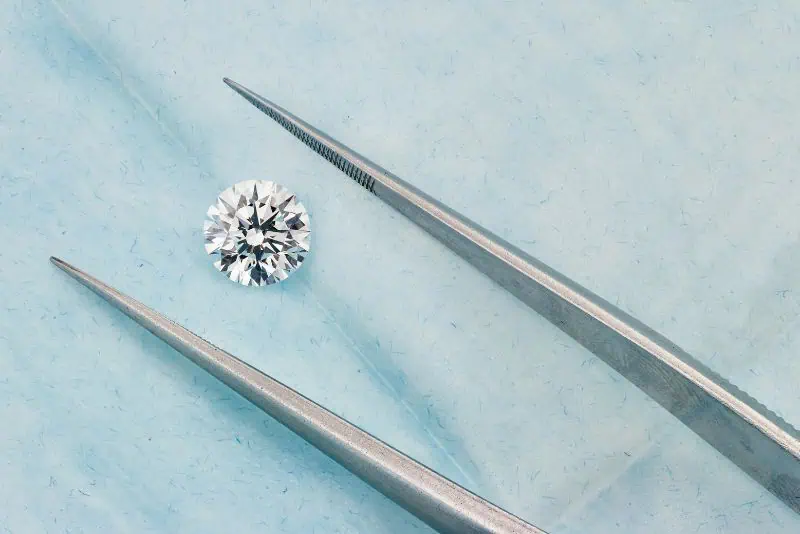
The cut produces the sparkle, and it is the grade most worth paying for. GIA grades the cut of a round brilliant on a scale running from Excellent to Poor, and it issues that grade for round brilliants only, so fancy shapes are compared on their polish and symmetry grades instead. Russel Shor, a senior industry analyst at the Gemological Institute of America, has said that cut is the real indicator of a beautiful diamond and that poorly cut diamonds look lifeless. He has also said the human eye generally cannot tell neighboring color grades apart. A stone with a few more inclusions and an excellent cut will still look flawless to the person wearing it, even though a gemologist with a microscope would see the difference.
Money moved from a higher clarity grade into a better cut grade improves the part of the stone that people notice, which is how much light it returns.
Lab-Grown Center Stones
Engagement rings with lab grown diamonds as the center stone made up 61% of sales in 2025, up 239% since 2020, according to The Knot. A lab-grown stone can be priced as much as 90% below a mined stone of the same specifications, with the exact gap depending on the stone’s size and grade.
Wholesale prices for lab-grown stones fell 26% across 2025, according to analyst Edahn Golan’s price list, although the fourth quarter had the smallest quarterly drop since the stones reached the market, at 4.7%. His index is down 96% since he began tracking in 2018. A lab-grown stone bought now costs a small fraction of its 2018 price, and a jeweler’s quote should be checked against current listings before paying.
Grading Reports for Each Type
In June 2025, the Gemological Institute of America announced a new grading system for lab-grown diamonds that drops the color and clarity grades it developed for natural stones. Its lab-grown reports now assign a Premium or Standard designation, and stones below the minimum receive no designation at all. As reported in the trade press, Premium requires D color, a clarity of VVS or higher and excellent polish and symmetry, while Standard covers E to J color with VS clarity and very good finish. Other labs, including the International Gemological Institute, still apply full color and clarity grades to lab-grown stones, and GIA’s chief executive has said GIA grades fewer than 5% of the lab-grown diamonds on the market.
A GIA Premium report and an IGI report with a color grade describe quality in two different systems. Comparing stones on price only makes sense when every stone in the comparison was graded by the same lab, so ask for that before visiting a second store.
Weight Steps for Natural and Lab-Grown Stones
For natural stones, the price per carat steps up at round weights such as 1.00 and 1.50 carats.
Lab-grown pricing has been moving the other way at the larger sizes. Golan’s Q2 2026 wholesale price list showed 2-carat lab-grown rounds down 20% year over year, while 1.50- to 1.99-carat rounds fell 11% and 1-carat rounds rose 1%. The extra cost of reaching the 2-carat mark in a lab-grown stone shrank over that year, which makes the larger size easier to justify in lab-grown than in natural.
Setting Style
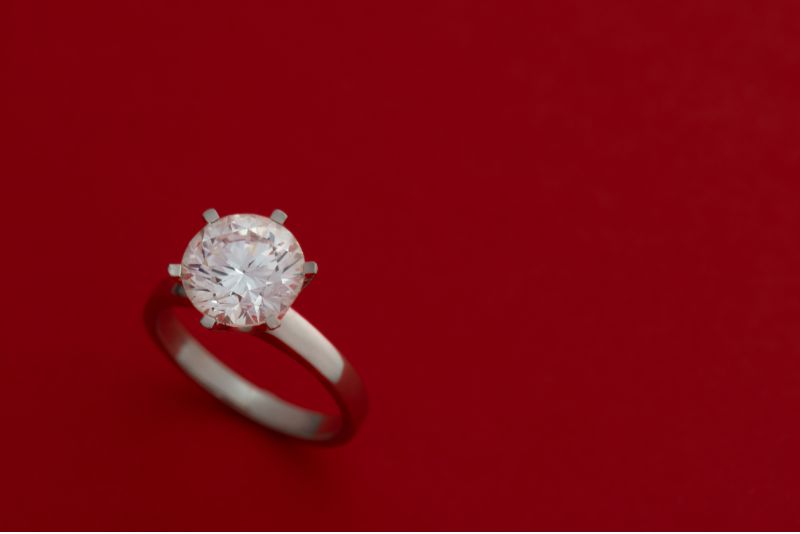
A solitaire is usually the least expensive setting, since almost all of the ring’s price is in the center stone. A halo, often paired with a pavé band down the shank, adds accent stones that each weigh only 0.01 to 0.025 carats. One price guide estimates that a halo with about 0.4 carats of accent stones costs $400 to $1,200 more than the same ring as a solitaire. A buyer comparing quotes can ask the jeweler to itemize the center stone, the accent stones, the metal and the labor, which shows how much of the total the setting accounts for.
Setting Metals in 2026
Gold traded at about $5,110 an ounce in March 2026, and the price of platinum was about $2,149, less than half the price of gold, even after platinum rose more than 77% from the start of 2025. A 14-karat gold setting is about 58.5% gold, against about 75% for 18-karat, so the 14-karat setting costs less. The added alloy metals also make 14-karat harder, which helps a ring that is worn every day resist scratches and dents. An 18-karat setting has a deeper yellow color and less alloy, so it is less likely to irritate sensitive skin.
Since metal prices move week to week, asking a jeweler to quote the same setting in 14-karat gold and in platinum shows the actual price difference for that design.
The $2,700 Difference
For a couple weighing natural against lab-grown, the 2025 averages already put a price on the decision. A natural ring cost $7,000 for a 1.6-carat stone. A lab-grown ring cost $4,300 for a 2-carat stone, which leaves $2,700 for the wedding band, the earrings or the honeymoon.